
Top Ad Networks for Advertisers: 10 Picks for 2026
Compare the top ad networks for advertisers in 2026, with strengths, limits, use cases, and practical guidance for choosing the right mix.
top ad networks for advertisers, advertising platforms, paid media, ad network comparison, digital advertising
The most popular advice about the top ad networks for advertisers is also the least useful: pick the platform with the largest audience and move most of your budget there. That approach ignores the job your advertising portfolio needs each network to perform. A search campaign that captures existing demand shouldn’t be judged by the same standard as a short-form video campaign creating demand from people who weren’t actively shopping.
A practical comparison should consider audience intent, reach, creative requirements, conversion tracking, budget control, operational complexity, and fit with the sales model. A marketplace seller, a B2B software company, and a mobile app won’t get the same value from the same inventory. Reported platform ROAS also isn’t proof of incremental sales. Advertisers should separate network-attributed conversions from new-to-brand outcomes, holdout-test results, and incremental ROAS, as the 2025 Skai industry survey highlights.
This list moves from broad performance platforms to specialist networks and open-web options. It also considers the work behind the campaigns, including creative production, event quality, placement review, moderation, and budget governance. Tools such as AdCrunch can help teams coordinate reading and approved operational changes across Meta, TikTok, and Google Ads, but reporting and execution still need separate controls.
Table of Contents
- 1. Google Ads Search YouTube and Google Display Network
- 2. Meta Ads Facebook and Instagram
- 3. TikTok Ads
- 4. Microsoft Advertising
- 5. Amazon Ads
- 6. LinkedIn Ads
- 7. Pinterest Ads
- 8. Reddit Ads
- 9. Snapchat Ads
- 10. Taboola
- Top 10 Ad Networks: Advertiser Comparison
- Build the Mix Around Your Bottleneck
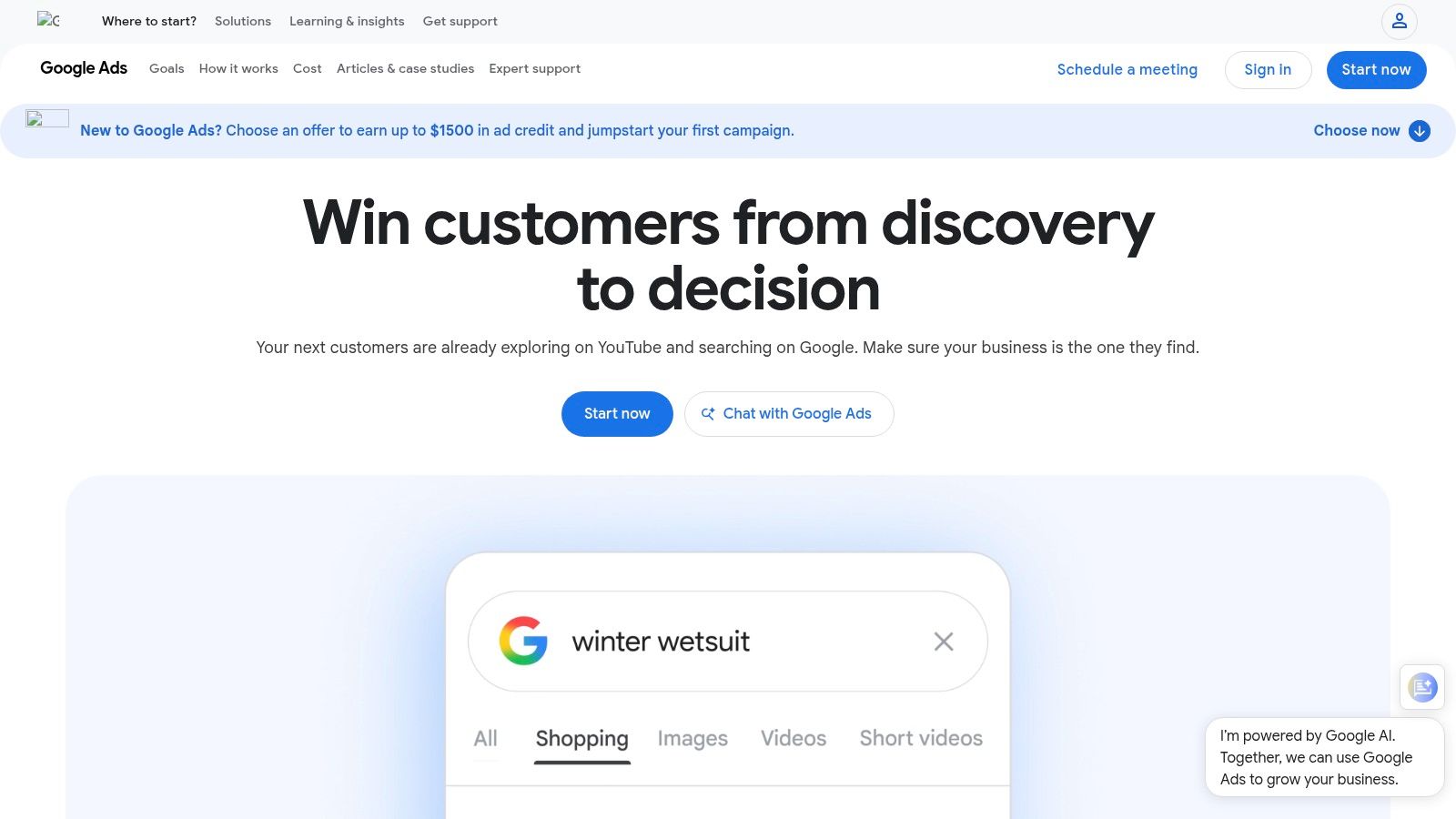
1. Google Ads Search YouTube and Google Display Network
Google Ads is not one channel, so it should not receive one blended target or budget. Its strongest job is capturing searchable demand through Search. YouTube creates demand with video, while the Google Display Network extends reach across partner websites and applications. Alphabet recorded $264.6 billion in Google advertising revenue during 2024, including approximately $198.1 billion from Search and other properties, $36.1 billion from YouTube ads, and $30.4 billion from the Google Network, according to the reported 2024 advertising breakdown.
That scale can support a broad portfolio, but each inventory type requires different execution. Search depends on query quality, match settings, landing pages, and conversion signals. YouTube needs a clear video concept, audience sequencing, and enough creative variation to avoid fatigue. GDN requires placement review, frequency controls, content exclusions, and brand-safety rules because inexpensive reach can produce weak traffic.
Where Google Ads earns priority
Give brand, non-brand, YouTube, and GDN campaigns separate objectives. Brand campaigns capture navigational demand and clarify branded query volume. Non-brand Search can pursue qualified prospects, while YouTube and GDN should use their own budgets and success criteria instead of inheriting Search targets.
Set primary conversion actions, values, exclusions, consent-aware tracking, and enhanced measurement where appropriate before relying on automated bidding. Check search terms and placements on a regular schedule. Establish bid and budget guardrails, and use monthly spend limits where the account structure supports them.
Practical rule: Use Google Ads as a portfolio of intent capture, demand creation, and open-web reach, not as one homogeneous channel.
For teams managing multiple accounts, Google Ads tools for campaign operations can help coordinate diagnosis and approved changes. AdCrunch can reduce operational handoffs across Meta, TikTok, and Google Ads, but reporting and execution still need separate controls. Automation may obscure why delivery shifted, and saturated categories can become expensive. Reliable conversion data, disciplined query review, and placement governance matter more than just raising spend.
2. Meta Ads Facebook and Instagram
Meta is often treated as a cheaper source of conversions, but its strongest portfolio role is demand creation and direct response. Facebook and Instagram can introduce an offer before someone searches for it, then support retargeting and customer reactivation. The channel fits products that can be explained through images, video, demonstrations, or creator-style concepts. Feed, Reels, Stories, and Collections provide reach, while automated placements can expand delivery quickly.
Meta’s scale is substantial. The company generated $160.633 billion in advertising revenue in 2024, and ads represented approximately 97.6% of its $164.501 billion total revenue, according to Meta’s 2024 annual filing. The filing also reports that ad impressions across its Family of Apps increased 11% year over year, while average price per ad increased 10%. Those figures establish platform scale, not the return an individual advertiser should expect.
Creative is the targeting system
Meta can support e-commerce, lead generation, and app growth, but results often depend more on creative variation than on elaborate audience segmentation. Set a clear event hierarchy, verify browser and server events, and separate qualified leads or purchases from weaker actions. Broad audiences may perform when conversion signals are reliable. Weak tracking gives automated delivery poor feedback.
Test hooks, offers, formats, creators, and landing pages. Avoid large budget changes during learning, and assess new concepts over a useful window rather than from one day of results. Creative fatigue, comment moderation, page health, access roles, and placement quality all create operational work that a ROAS column will not show.
- Audience structure: Separate prospecting, retargeting, and customer exclusions according to clear business rules.
- Placement review: Compare Reels, Stories, Feed, and other surfaces by qualified outcomes, not reach alone.
- Budget control: Document each change, set guardrails, and monitor delivery after adjustments.
Use Facebook Ads optimisation guidance with controlled operating procedures when managing several Meta accounts. AdCrunch can support campaign creation, budget adjustments, pausing, and permanent activity logging on Meta. That reduces execution inconsistency, but it does not replace creative judgment, backend revenue checks, or incrementality testing. The practical choice is Meta when the team can produce fresh creative and measure business outcomes, not only when the platform offers broad reach.
3. TikTok Ads
TikTok Ads earns a place in an advertising portfolio by creating demand before a person searches for a product. It is a discovery and creative-led performance network for offers that can win attention through a native-feeling demonstration, creator voice, trend-aware concept, or fast visual hook. In-Feed and Spark Ads support that role, while requiring a stronger creative operation than intent-led channels.
The trade-off is clear: TikTok can generate attention and demand, but the account depends on concepts built for its viewing environment. Reusing a polished static asset from another feed often feels like an interruption. Start with a platform-native idea, then connect it to a specific offer and landing page that can convert new demand.
Build a repeatable creative system
Create a testing system for hooks, messages, formats, creators, and offers instead of asking one video to carry the account. Creator collaborations and UGC-style assets can fit the product, but claims, disclosures, and brand standards still need review. Refresh fatigued concepts before delivery weakens, and judge volatility over a useful learning window rather than reacting to each short-term result.
Measurement needs more than engagement or reported conversions. Set up browser and server-side events where appropriate, validate event quality, and compare TikTok reporting with backend revenue or qualified leads. A video may attract attention without producing valuable customers, particularly when the offer or post-click experience is weak.
TikTok rewards a production process, not a one-time creative upload.
Use TikTok Ads tools for campaign management when the team needs a consistent view of TikTok alongside Google Ads and Meta. AdCrunch provides read access across connected platforms, helping practitioners compare campaign structure and performance without switching context. That reduces review effort, but it does not replace creative judgment, revenue checks, or incrementality testing. Plan for ongoing concept development, comment and brand-safety review, and operational work whenever TikTok becomes a meaningful demand-creation channel.
4. Microsoft Advertising
Microsoft Advertising earns a place in an advertising portfolio as an incremental intent channel, particularly for advertisers that already have a working search program. It reaches search inventory, partner environments such as Yahoo and DuckDuckGo, the Microsoft Audience Network, and surfaces including retail, display, video, and CTV. Its job is to add qualified intent and reduce dependence on Google, not to reproduce Google’s total reach.
Google import workflows make the initial setup relatively quick. They also make careless duplication easy. Imported bids, match types, audiences, exclusions, conversion actions, and budgets still need review because Microsoft traffic can produce different query patterns, partner exposure, audience-network delivery, and conversion volume.
Treat the import as a starting point
Bring over campaigns with a defined objective and reliable tracking, then inspect performance before expanding coverage. Review search terms independently from partner and audience-network placements. Compare qualified leads, purchases, or downstream revenue with the original account. Click volume alone cannot show whether the added inventory is useful.
A thin stream of leads or sales should trigger a measurement and traffic-quality review, not an automatic budget increase. Confirm that conversion actions fire correctly, lead quality is acceptable, and partner placements support the campaign’s goal.
Microsoft’s Performance Max-style options and multi-surface inventory can extend reach beyond classic search, but they add operational workload. Keep search, native, video, and retail objectives distinct where reporting needs to explain which job each surface performs. More inventory can also make attribution harder to interpret.
Use Microsoft Advertising when the team can maintain search hygiene, inspect imported settings, and evaluate incremental outcomes against Google. It suits advertisers seeking additional high-intent reach and channel diversification. Lower competition may help, but it does not guarantee better economics. The practical test is whether the network adds qualified demand after placement quality, conversion quality, and management time are accounted for.
5. Amazon Ads
Amazon Ads earns its place in an advertising portfolio when the advertiser has a meaningful Amazon marketplace presence. Sponsored Products, Sponsored Brands, and Sponsored Display connect campaigns with product discovery, detail pages, category context, and purchase behavior. The network’s job is commerce activation: defending product visibility and reaching shoppers close to a transaction.
That proximity can make ROAS easier to read than on channels where the purchase happens elsewhere. It does not prove that advertising caused every sale. Product demand, brand familiarity, organic ranking, repeat purchases, and competitor activity can all influence reported revenue.
Optimize the retail system, not just the ad
Start with the product detail page. A weak title, unclear imagery, poor merchandising, or limited availability can make a well-targeted campaign appear inefficient. Review search terms to separate discovery from branded and defensive activity, then keep marketplace sales goals distinct from broader brand-awareness work.
Sponsored placements can serve two different jobs. Product defense protects an existing position, while acquisition should be assessed through new-customer quality, category expansion, or contribution to profitable growth. Give each objective its own expectations and reporting rather than judging every campaign by the same ROAS target.
A marketplace campaign cannot fix a product page that fails to explain why the product belongs in the basket.
Auction pressure can increase as brands compete for valuable queries and placements. Inspect placement reports, category context, detail-page conversion, and profitability before raising bids. Amazon is a strong commerce-linked channel, yet it is a poor primary choice for a business without a credible marketplace catalog or a sales process that ends elsewhere. It also brings operational work across catalog quality, inventory, retail reporting, and campaign structure.
6. LinkedIn Ads
LinkedIn Ads performs the job of reaching professional audience definition, lead generation, and account-based marketing targets. Its targeting uses roles, companies, industries, and professional context, making it a practical choice when buyer relevance matters more than inexpensive consumer reach.
The channel earns its place in a mix when a qualified professional audience is the bottleneck. It is a weaker fit for broad offers, short purchase cycles, or teams that cannot respond to leads promptly. Higher media costs also require budget discipline and enough patience to measure progress beyond the initial click.
Campaign setup should connect audience selection to the sales process. Use account lists or tightly defined professional audiences only when sales has a clear follow-up motion. Lead Gen Forms reduce conversion friction, but they can also increase the share of contacts who are unready or unsuitable. Feed acceptance, meeting quality, pipeline progression, and revenue back into reporting, then judge lead sources by business value rather than form volume.
Choose the format according to the buyer’s stage and the offer. Sponsored Content can introduce an educational point of view, while Message Ads and Conversation Ads support a more direct invitation. Lead Gen Forms work when the exchange is clear and the requested information matches the next sales step. A high-consideration purchase may require useful content before a conversion request.
Operational checks should stay visible:
- Targeting: Build around buying roles and account relevance, not job-title volume alone.
- Frequency: Monitor repetition closely in narrow professional audiences.
- Creative: State the buyer’s problem, provide relevant proof, and make the next step specific.
LinkedIn can create demand and capture response from a defined B2B audience, but it will not compensate for vague positioning, weak qualification, or poor lead handling. Measure the full path from exposure to accepted lead and revenue, and keep expectations aligned with the sales cycle.
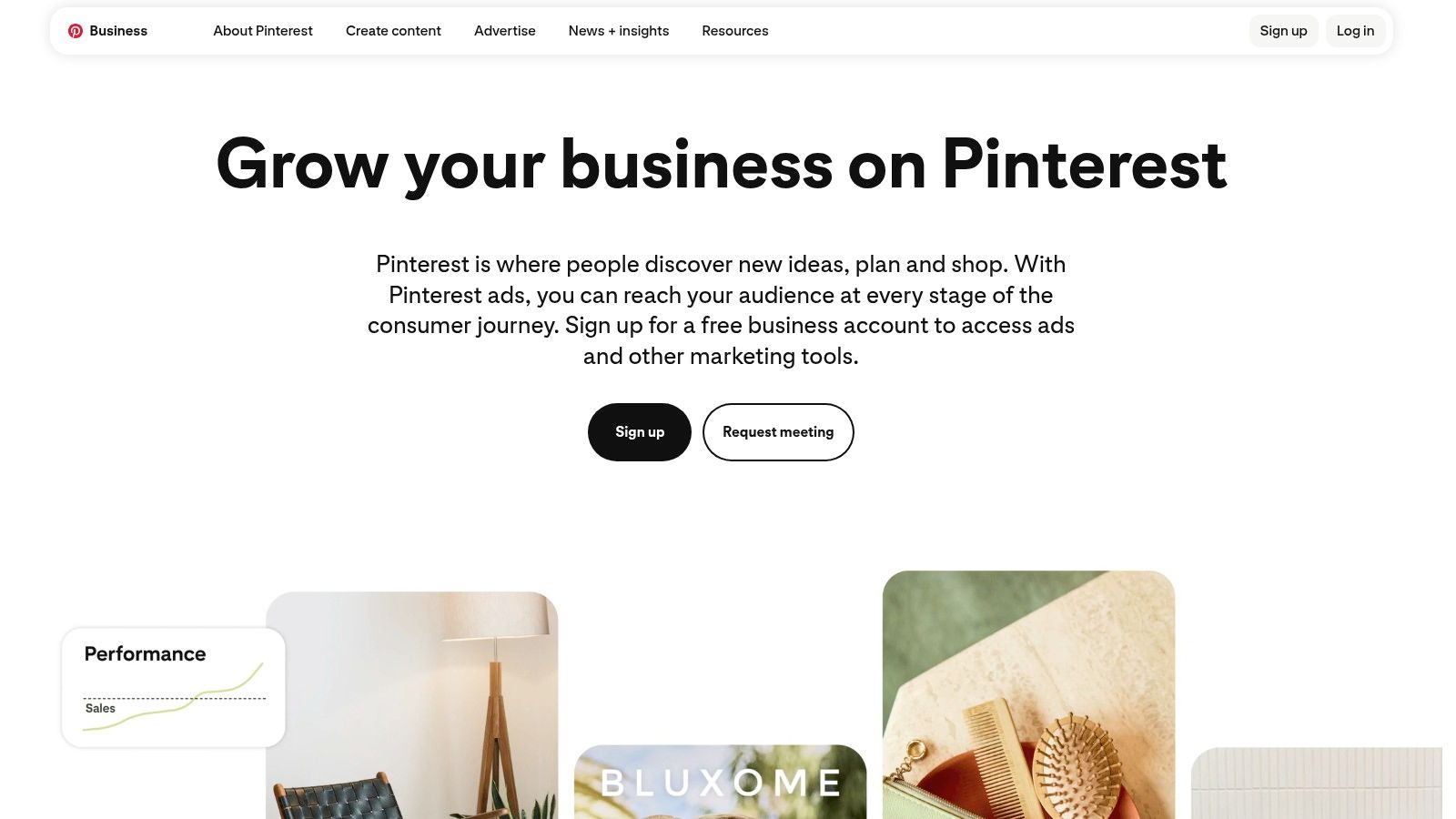
7. Pinterest Ads
Pinterest Ads is less useful for capturing an active search than for creating demand while people plan what to buy. Its planning-led discovery role suits visual categories such as home, lifestyle, fashion, beauty, and seasonal commerce. Users may be collecting ideas, comparing options, or building a project before they are ready to purchase, so Pinterest sits between search capture and interruption-based social advertising.
That positioning changes the creative requirement. Product images should help people picture an outcome, plan a project, or compare choices. Resizing a Meta asset often produces an ad that feels out of place in a feed built around inspiration and visual references. Use cases, occasions, and product combinations should shape the creative concept.
Set up the account so the platform can classify the offer and the team can diagnose performance. Organize catalogs, products, boards, and campaign groups by meaningful categories. Select the campaign goal according to the business outcome, then evaluate saves, outbound clicks, product actions, and downstream conversions together. A save can indicate planning intent, but it does not equal a sale.
Timing adds another constraint. Visual campaigns launched after the audience has already made its seasonal plans may struggle even with suitable targeting. Refresh assets when the visual idea has run its course, and keep product names, categories, and availability accurate.
- Asset adaptation: Design for Pinterest rather than copying a general social feed ad.
- Catalog hygiene: Keep product information and inventory current.
- Evaluation: Connect engagement signals to qualified traffic and conversion quality.
Pinterest can create demand for products that benefit from visual explanation, but it brings narrower reach than Google or Meta and requires more taxonomy work. Choose it when the team can produce planning-oriented creative and measure the path from discovery to conversion. The Pinterest Ads placement can support that role, not replace intent capture elsewhere.
8. Reddit Ads
Reddit Ads is a community and research network for reaching people as they compare solutions, troubleshoot problems, or ask for recommendations. Its portfolio role is capturing demand in specialist communities and creating demand around problems that search data may not fully express. It suits developer tools, gaming, technical services, and niche products when the team can match each audience’s context.
Subreddit targeting provides more context than broad demographic buying, but it raises the creative standard. Technical communities expect precise language, useful claims, and respect for existing knowledge. Vague benefits, inflated promises, or copied social creative can invite negative comments and weaken trust before the click.
Test communities as separate environments
Build separate campaign groups for important subreddits or closely related clusters. Compare qualified traffic, product engagement, and downstream conversions by community instead of letting one blended audience hide weak placements. Pixel and CAPI support can connect campaigns to later actions, but validate the setup and judge performance beyond clicks.
The operating workload extends into comment management. Assign an owner, define response rules, and decide whether comments should stay open where the format allows it. Open comments let a knowledgeable representative answer genuine questions, while closed comments reduce exposure to unproductive discussion. Either approach requires monitoring sentiment and policy compliance.
On Reddit, message-market fit includes the community’s language, expectations, and tolerance for promotion.
Use native-looking copy, explain the offer plainly, and send users to a landing page that continues the conversation. Results can vary sharply by subreddit and creative. Reddit can provide efficient, high-signal traffic when the fit is real, but it will not repair a weak offer or replace intent capture on channels built for active searches.
9. Snapchat Ads
Snapchat Ads works best as a mobile-first, full-screen video network for creating demand, driving app installs, supporting e-commerce, and extending upper-funnel reach. It belongs in the mix when the audience already consumes mobile video and the team can produce vertical creative built for quick attention.
Audience fit should determine the test. A consumer product with an obvious visual benefit may move naturally from impression to action. A B2B offer aimed at older decision-makers may generate limited value, especially if the buying process depends on desktop research or extended professional consideration.
Match creative, setup, and measurement to the journey
The opening visual must communicate the product, offer, or action before the viewer loses interest. Use movement and clear branding, but make the next step understandable without relying on sound. Keep separate concepts for awareness, consideration, and conversion rather than recycling one asset throughout the funnel.
App campaigns should connect the platform’s SDK or measurement setup to post-install events. Commerce campaigns need a reliable pixel, product feed where relevant, and a conversion path that can be checked from click to purchase. For creative and measurement checks, see this guide to improve Snapchat ad performance.
Creative fatigue can arrive quickly in a narrow audience or format. Rotate openings, demonstrations, offers, and calls to action, then review completion rates, install quality, revenue, and downstream events instead of optimizing to clicks alone.
Before launch, verify:
- Audience check: Confirm age, geography, and mobile behavior.
- Measurement check: Test app, commerce, and post-conversion events.
- Production check: Keep enough vertical concepts ready for iteration.
Snapchat’s self-serve setup can make initial testing accessible, but the operational work shifts to creative production and event validation. Choose it to create demand or prompt mobile action when audience and format align. Avoid making it a core channel when the sales journey is desktop-led or the demographic fit is weak.
10. Taboola
Cheap clicks are the wrong reason to add Taboola. Its job is extending acquisition into open-web native discovery, where recommendations appear beside or within publisher content. That reach can diversify a portfolio beyond Google and social platforms, but it also puts more responsibility on the advertiser. The headline, image, offer, and landing page must work together before and after the click.
Taboola fits content-led acquisition, remarketing, and campaigns built around educational articles, comparison pages, product explainers, or editorial-style offers. It is a weaker choice for a thin landing page or a funnel that expects search-level intent from every visitor. Treat the channel as a demand creation and reach extension layer, then judge it by qualified actions and revenue rather than traffic volume alone.
Operational control determines whether that reach is useful. Review site-level reporting, categories, devices, and individual placements. Set exclusions and bid adjustments before expanding delivery, and define conversions clearly enough to distinguish a visit from a meaningful business outcome. Check time on page, qualified actions, sales quality, and post-click behavior. Aggregate CPC can look efficient while downstream performance remains weak.
Creative should feel native without making a misleading promise. Test headlines and images that create a relevant information gap, then make the landing page answer that question quickly. Control frequency and retargeting so users do not receive repetitive recommendations across publisher sites.
Use three checks before scaling: Supply controls for sites, categories, devices, and placement quality; Landing-page fit for continuity between the ad and page; and Scaling test for conversion quality at higher volume.
Taboola’s open-web reach brings ongoing exclusion and bid-management work. Use it when content and measurement can support that workload. Use another channel when the priority is tightly controlled intent or a simpler path from click to conversion.
Top 10 Ad Networks: Advertiser Comparison
| Network | Core strengths ✨ | Best for 👥 | Performance / UX ★ | Unique edge & AdCrunch fit 🏆 | Pricing / Cost signal 💰 |
|---|---|---|---|---|---|
| Google Ads (Search, YouTube, GDN) | Search intent + YouTube scale; automation & rich targeting ✨ | Performance marketers, brand teams 👥 | ★★★★☆, deep insights, steep learning | Read access in AdCrunch for unified diagnostics; large-intent inventory, planning tools 🏆 | 💰Competitive CPC/CPM; costly in saturated verticals |
| Meta Ads (Facebook & Instagram) | Creative-first formats, fast test velocity; broad placements ✨ | DTC, app growth, direct response 👥 | ★★★★☆, high performance, learning-phase sensitive | Full write access via AdCrunch: controlled campaign creation (starts paused), audit trail 🏆 | 💰Scalable ROI but sensitive to signal loss |
| TikTok Ads | Short-form discovery; creator/native formats, rapid creative scale ✨ | Commerce & app discovery; Gen Z audiences 👥 | ★★★★☆, high engagement, volatile by asset | Read access in AdCrunch; unified view for creative testing and cross-network comparisons 🏆 | 💰Variable, creative-driven ROI, needs high cadence |
| Microsoft Advertising | Bing + MSAN incremental search; lower competition ✨ | Expansion/incremental search reach; familiar to Google users 👥 | ★★★☆☆, reliable intent, smaller reach | Read access; good for incremental lift & import workflows in AdCrunch 🏆 | 💰Often lower CPC vs Google; validate volume before scaling |
| Amazon Ads | Commerce-proximate, closed-loop ROAS measurement ✨ | Sellers and retail brands with Amazon presence 👥 | ★★★★☆, strong conversion signals when product fit is right | Read access; pairs well with AdCrunch for retail-aware optimization and unified reporting 🏆 | 💰Auction-driven; can be efficient or expensive depending on category |
| LinkedIn Ads | Deterministic professional targeting; Lead Gen primitives ✨ | B2B, ABM, high-value lead generation 👥 | ★★★☆☆, precise but costly, creative constraints | Read access; centralizes ABM ops and activity logging in AdCrunch 🏆 | 💰Higher CPC/CPM; premium for professional audiences |
| Pinterest Ads | Visual discovery & planning; idea-to-purchase intent ✨ | Home, lifestyle, fashion, seasonal commerce 👥 | ★★★☆☆, strong for visual product fit | Read access; useful in AdCrunch for cross-network seasonal strategy 🏆 | 💰Historically efficient CPCs in visual categories |
| Reddit Ads | Community-targeted, high-signal niche audiences ✨ | Niche products, gaming, developer tools, technical buyers 👥 | ★★★☆☆, performance varies by subreddit | Read access; AdCrunch helps test communities and track downstream quality 🏆 | 💰Variable; can be cost-efficient with tight community fit |
| Snapchat Ads | Mobile-first full-screen vertical creative; young demos ✨ | Gen Z / young millennials; app installs & mobile commerce 👥 | ★★★☆☆, fast creative cycles, wear-out risk | Read access; consolidates mobile-first campaigns & metrics in AdCrunch 🏆 | 💰Efficient for young demos; low recommended budgets possible |
| Taboola | Native content discovery on open web; scalable reach ✨ | Content-led acquisition, mid/lower-funnel remarketing 👥 | ★★★☆☆, dependent on landing-page & creative quality | Read access; complements AdCrunch for placement controls and conversion checks 🏆 | 💰Cost-effective scale but needs vigilant site/placement optimization |
Build the Mix Around Your Bottleneck
The right network depends on the constraint your advertising team needs to solve. Choose Google Ads or Microsoft Advertising when existing intent matters and the business can measure query-level efficiency. Google gives you broader intent, YouTube, and display coverage, while Microsoft can add incremental search and partner inventory without requiring a completely new operating model.
Choose Meta or TikTok when creative-led demand creation is the priority. Meta offers a broad set of social placements and mature direct-response workflows. TikTok is a stronger fit when the team can produce native short-form concepts at a steady pace and judge success on qualified outcomes rather than engagement alone. A team without creative capacity shouldn’t add either platform just because its audience is large.
Choose Amazon Ads when marketplace-linked commerce is central to the business. Product detail-page quality, search-term analysis, category context, and retail profitability should shape the campaign structure. Choose LinkedIn when professional targeting and account relevance matter more than low-cost traffic. Its lead forms can reduce friction, but sales acceptance and pipeline quality must remain part of the measurement plan.
Pinterest and Snapchat are audience and format choices. Pinterest fits planning-led visual commerce, while Snapchat fits mobile-first vertical creative and younger audience segments. Reddit is a community-specific discovery channel for products that benefit from research, discussion, and credibility. Taboola is the open-web expansion option when the advertiser has strong content, placement controls, and the patience to monitor conversion quality.
The largest platforms also create dependency risk. A 2025 market estimate places Alphabet, Meta, Amazon, and ByteDance at approximately 52.7% of worldwide digital advertising revenue, while another analysis estimates Google and Meta together at 49.5% of global internet-advertising spending. These estimates appear in market analyses of global advertising concentration. The practical lesson isn’t to avoid large networks. It’s to build reporting that normalizes spend, conversions, attribution windows, campaign hierarchy, creative identifiers, and currency while preserving each platform’s native settings.
Compare networks on four measures:
- Qualified outcomes: Separate platform-reported ROAS from new-to-brand sales, pipeline quality, contribution margin, and incremental results.
- Creative workload: Count the concepts, formats, refreshes, approvals, and production time each network requires.
- Measurement reliability: Check event quality, data access, attribution limits, experiment support, and whether results travel outside the platform dashboard.
- Operational effort: Include account permissions, placement review, moderation, budget changes, and audit requirements.
A controlled test should document the objective, audience, offer, event definition, budget rule, creative requirements, and stop conditions before launch. Review placement quality and conversion quality together. If UGC is part of the plan, use practical ClipCreator.ai UGC ad tips to improve the creative brief, but keep platform policy and brand review in the process.
For multi-account teams, centralize approved actions and audit history rather than relying on scattered comments or dashboard exports. AdCrunch can connect Meta, TikTok, and Google Ads for consistent account and performance reading, and its Meta write scope supports controlled campaign creation, budget changes, pausing, resuming, and archiving. The useful workflow is simple: diagnose the bottleneck, test the network that addresses it, verify the outcome, and record every operational change.
AdCrunch gives teams a shared operating layer for Meta, TikTok, and Google Ads, with performance and account data available through its console, integrations, MCP server, or REST API. Its controlled Meta actions start paused and preserve a permanent activity log, so agencies and in-house teams can coordinate budget changes and campaign operations with a clear record. Visit AdCrunch to see whether it fits your multi-account advertising workflow.